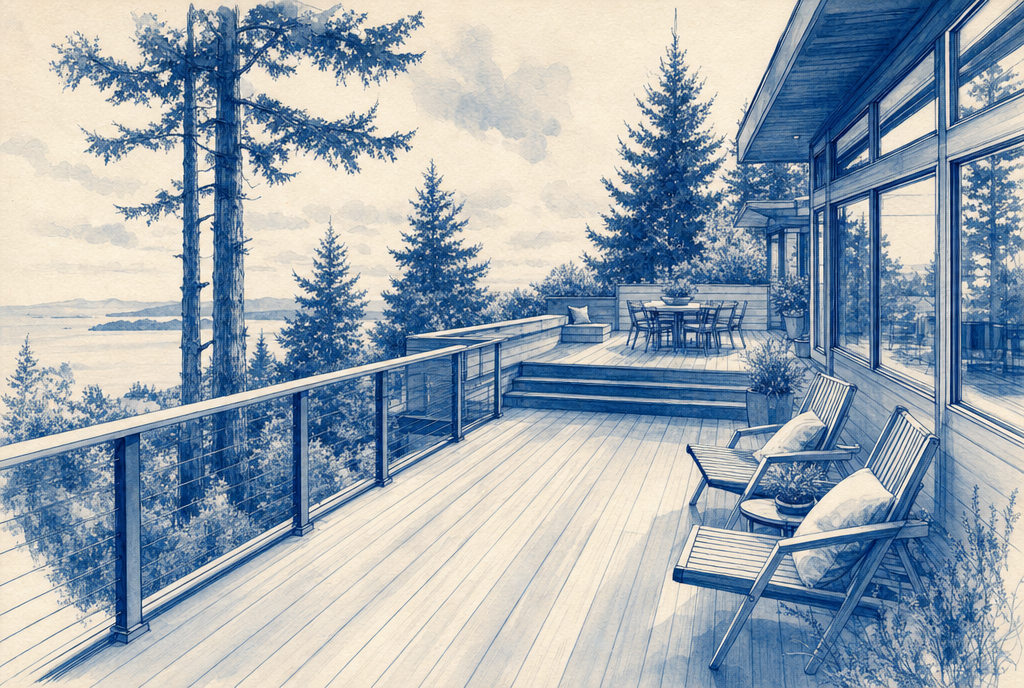
Slope Residence I — Design Study
Steep Slope · 2026A design study for a structural deck on a geotechnically sensitive 40% slope using a helical pier foundation system.
### How we approach this site
A design study showing how we would build on a 40% slope parcel where conventional concrete footings are not viable.
Foundation logic
On a 40% slope inside Seattle SDCI’s Environmentally Critical Area overlay, conventional concrete footings add dead weight to soil that is already under shear stress. Excavation also disturbs root systems that act as natural slope stabilizers.
A helical steel pier network driven into dense glacial till bypasses the creeping topsoil layer and transfers structural load 8–15 feet below grade with minimal soil disturbance. See [Why Seattle ECA Decks Need Helical Pier Engineering](/journal/why-seattle-eca-decks-need-helical-pier-engineering/) for the full technical rationale.
Material logic
Capped composite (Trex Transcend Lineage or TimberTech Reserve) is the default for slope projects in the PNW — moisture absorption is the primary failure mode for natural wood on damp, shaded sites, and capped polymer surfaces eliminate it. Steel framing components are powder-coated for marine corrosion resistance.
For a project pricing range on this profile, see [Cost to Build a Deck in Seattle](/cost/cost-to-build-a-deck-in-seattle/).
Material Specification
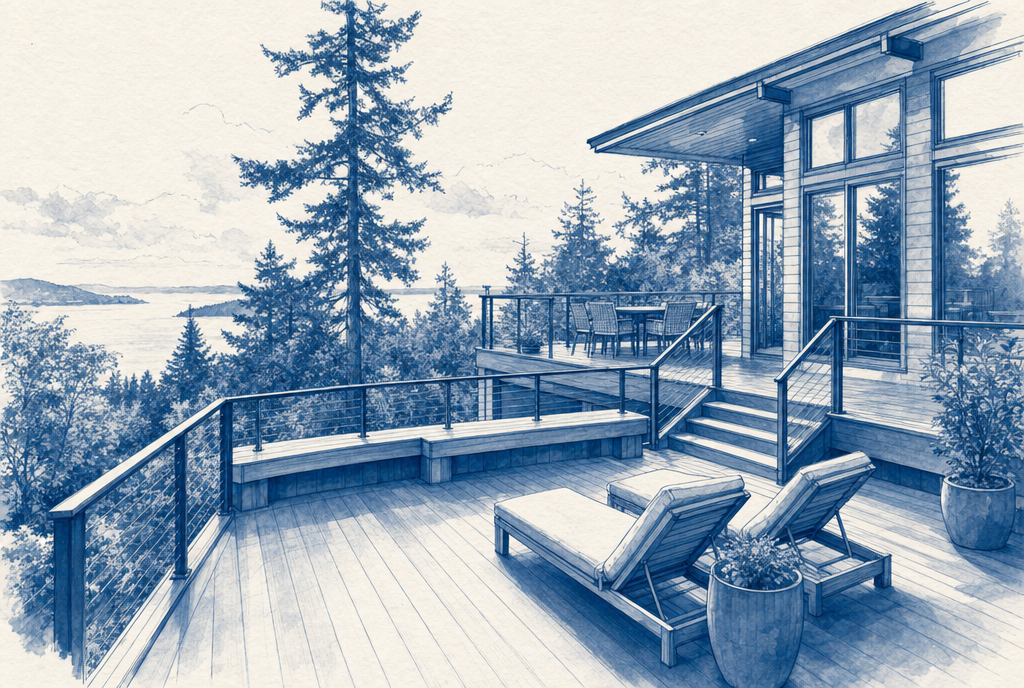
Capped composite decking, integrated low-voltage lighting, structural steel framing, and architectural cable rail partitions.
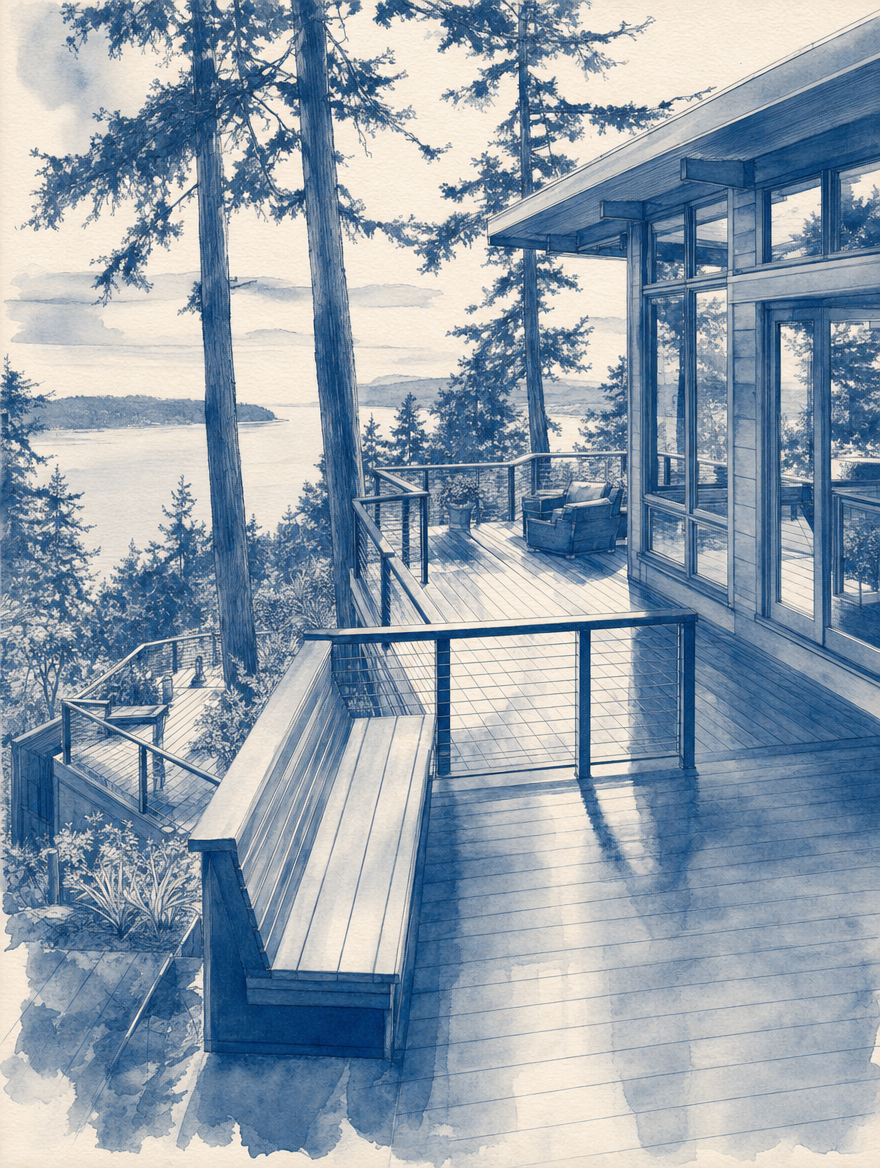
Design study — built-in bench and cable rail on the upper level.